Heat Pump Costs in Inverness
Last updated 1 November 2026 · Reviewed by the Scottish Energy Efficiency team
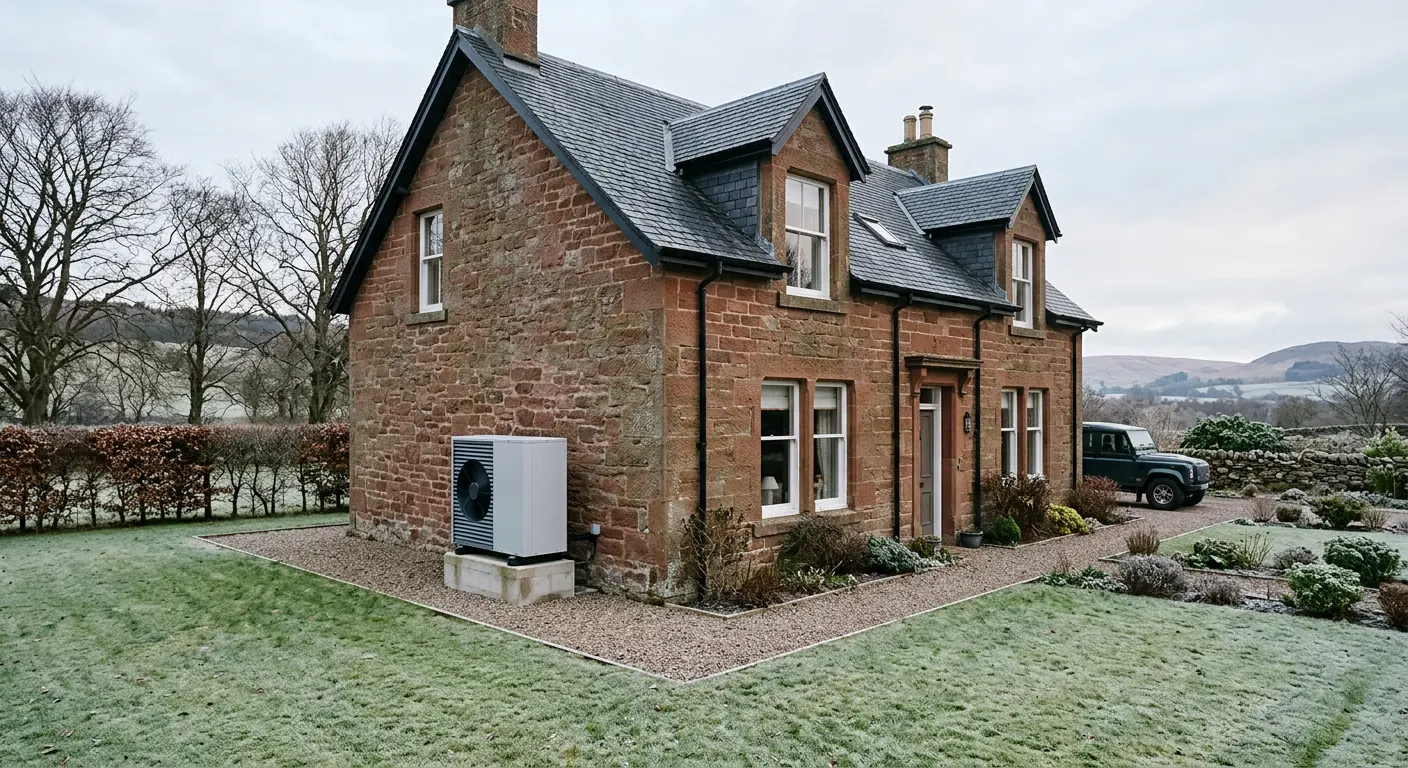
Can a heat pump heat an off-gas-grid croft house near Inverness?
Yes. Croft houses often have solid stone walls and high exposure, so the survey measures heat loss carefully and sizes the system for the colder Highland design temperature.
The countryside around Inverness — out towards Nairn, Forres, Aviemore and into the glens — has a high proportion of off-gas-grid homes. Croft houses, rural cottages and farmsteads in these areas are often solid stone constructions, sometimes with thick walls that hold heat well once warm but lose it steadily in exposed locations. Many run on oil, LPG or older electric storage heaters. A heat pump is a viable option for these properties, but the survey has to be thorough: it measures the actual heat loss through the walls, roof, floor and windows, and accounts for the greater exposure that comes with a rural Highland setting. The system is then sized using a colder design outdoor temperature that reflects Highland winter conditions, so it maintains warmth on the coldest expected days.
Are heat pumps cheaper to run than oil or LPG in the Highlands?
They can be. Heat pumps are far more efficient than oil or LPG boilers, and rural fuel deliveries can carry surcharges. A survey gives an honest running-cost comparison.
Oil and LPG boilers are around 90% efficient at best, while a heat pump can produce three or more units of heat for every unit of electricity used. That efficiency gap matters more in the Highlands, where rural fuel deliveries often carry surcharges, minimum order quantities, and prices that fluctuate with global markets and delivery costs. LPG is similarly subject to tank rental and delivery logistics. For an off-gas-grid Highland home, the running-cost comparison against a heat pump is often more favourable than for a gas-grid property in the central belt. The comparison depends on your property's heat loss and the system's efficiency, which is what the survey establishes. We give you realistic numbers for your actual home rather than a generic claim.
Do heat pumps work in Inverness's harsh Highland winters?
Yes. Modern heat pumps are designed for cold climates and operate efficiently well below freezing. The system is sized using a colder Highland design temperature for winter performance.
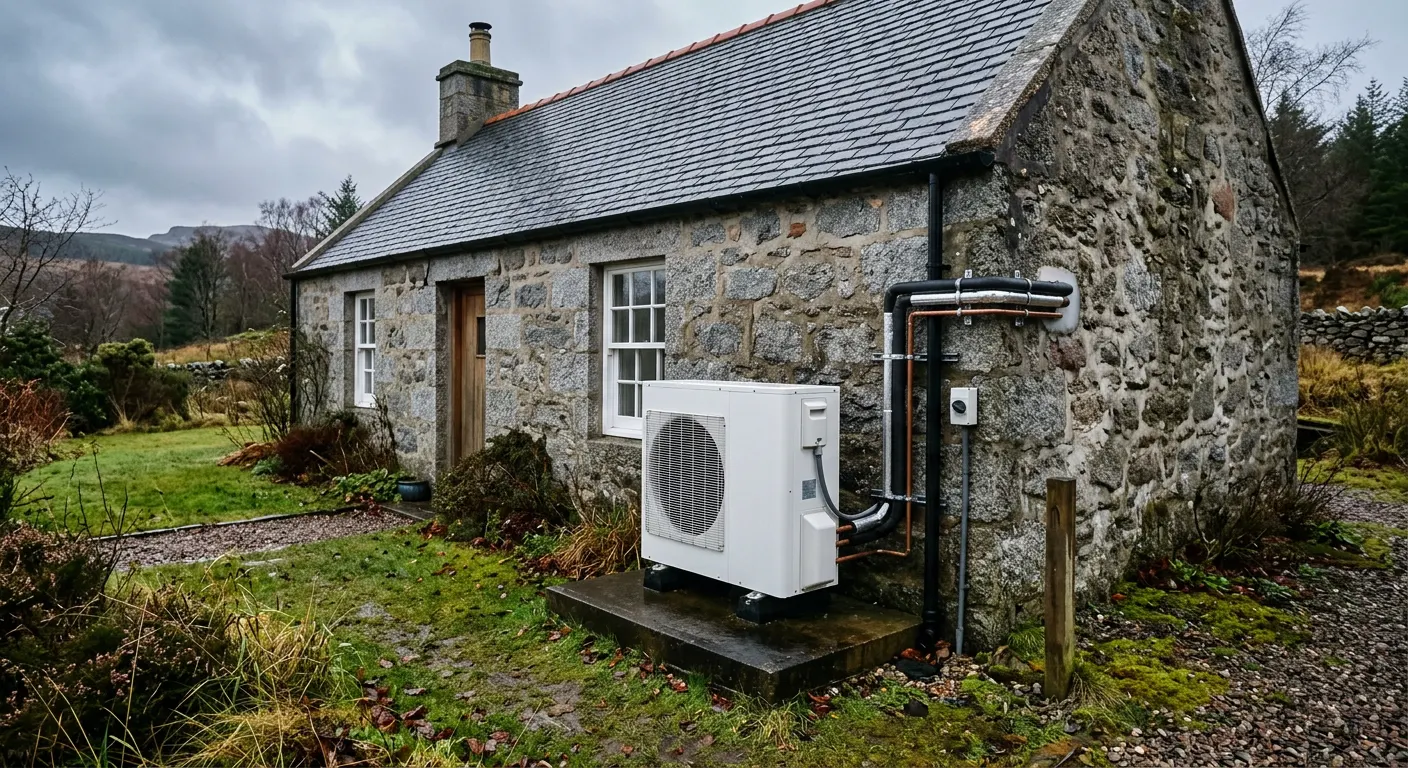
Inverness and the surrounding Highlands experience colder, longer winters than the central belt, with hard frosts, snow and persistent cold from late autumn through spring. This is well within the operating range of a modern air source heat pump. These systems are widely used across Scandinavia and Northern Europe, where winter temperatures fall far lower than anything experienced in the Highlands. The key is correct sizing against the local design outdoor temperature, which for this area is colder than for the central belt. A system specified for that temperature maintains your target indoor temperature on the coldest expected days. The survey also considers where the external unit sits, keeping it sheltered from prevailing wind and clear of snow drift or anything that could block airflow through the winter.
What insulation options exist for a solid-walled Highland cottage?
Solid stone walls cannot take cavity insulation, so loft, floor and draught-proofing improvements are the usual focus, with solid wall insulation where permitted and practical.
Many Highland cottages and croft houses have solid stone walls, sometimes a metre or more thick in older properties. There is no cavity to insulate, so cavity wall insulation is not an option. The practical improvements are usually at the loft, where topping up insulation is straightforward and effective; under suspended timber floors, where floor insulation cuts draughts and heat loss; and around windows and doors, where draught-proofing makes an immediate difference. Solid wall insulation — applied internally or externally — is possible but more involved, and may face restrictions on older or listed buildings. The survey assesses what is practical and worthwhile for your specific cottage. The lower the heat loss, the smaller and more efficient the heat pump, so insulation work before installation often pays for itself in system sizing.
What happens to my oil tank if I switch to a heat pump near Inverness?
The tank is no longer needed. Removal and disposal are usually arranged as part of the installation, and you stop needing oil deliveries, monitoring and tank maintenance.
For households that have lived with an oil tank for years, removing it is one of the most welcome parts of switching to a heat pump. Above-ground plastic tanks are usually straightforward to remove. Below-ground tanks may need to be emptied, cleaned and either removed or filled with an inert material, depending on local requirements. We can advise on what is involved and arrange it as part of the overall installation where appropriate. Once the tank is gone, there is nothing to monitor, no deliveries to order before winter, no risk of theft or spills, and no tank maintenance or inspection costs. For many rural Highland households, that peace of mind is as significant as any running-cost saving.
Want a figure for your Inverness home?
A full heat loss survey comes first, then a written, itemised quote. Installation through our MCS-certified partners.
Frequently asked questions
Heat pump questions for Inverness
Yes. Croft houses often have solid stone walls and high exposure, so the survey measures heat loss carefully and sizes the system for the colder Highland design temperature.
They can be. Heat pumps are far more efficient than oil or LPG boilers, and rural fuel deliveries can carry surcharges. A survey gives an honest running-cost comparison.
Yes. Modern heat pumps are designed for cold climates and operate efficiently well below freezing. The system is sized using a colder Highland design temperature.
Solid stone walls cannot take cavity insulation, so loft, floor and draught-proofing improvements are the usual focus, with solid wall insulation where permitted and practical.
The tank is no longer needed. Removal and disposal are usually arranged as part of the installation, and you stop needing oil deliveries, monitoring and tank maintenance.
Areas we cover
Nearby areas
We survey and install across Inverness and the surrounding area, including Nairn, Forres, Aviemore, Dingwall, Beauly, Drumnadrochit.
- Nairn
- Forres
- Aviemore
- Dingwall
- Beauly
- Drumnadrochit
Related guides
Keep reading
Get a quote
Ready for a real heat pump quote?
Fill in the form and we will call you back to book a full survey. No obligation, no single price before we have seen your house.
- 0141 230 0198
- Message us on WhatsApp
- info@scottishenergyefficiency.co.uk
- Unit 3 Prospect III, Prospect Business Centre, Dundee DD2 1TY
Get a quote
Fields marked * are required. We will call you back to book your survey.