Heat pump vs oil boiler: which is better in Scotland?
Last updated 1 November 2026 · Reviewed by the Scottish Energy Efficiency team · Costs are typical ranges, subject to survey
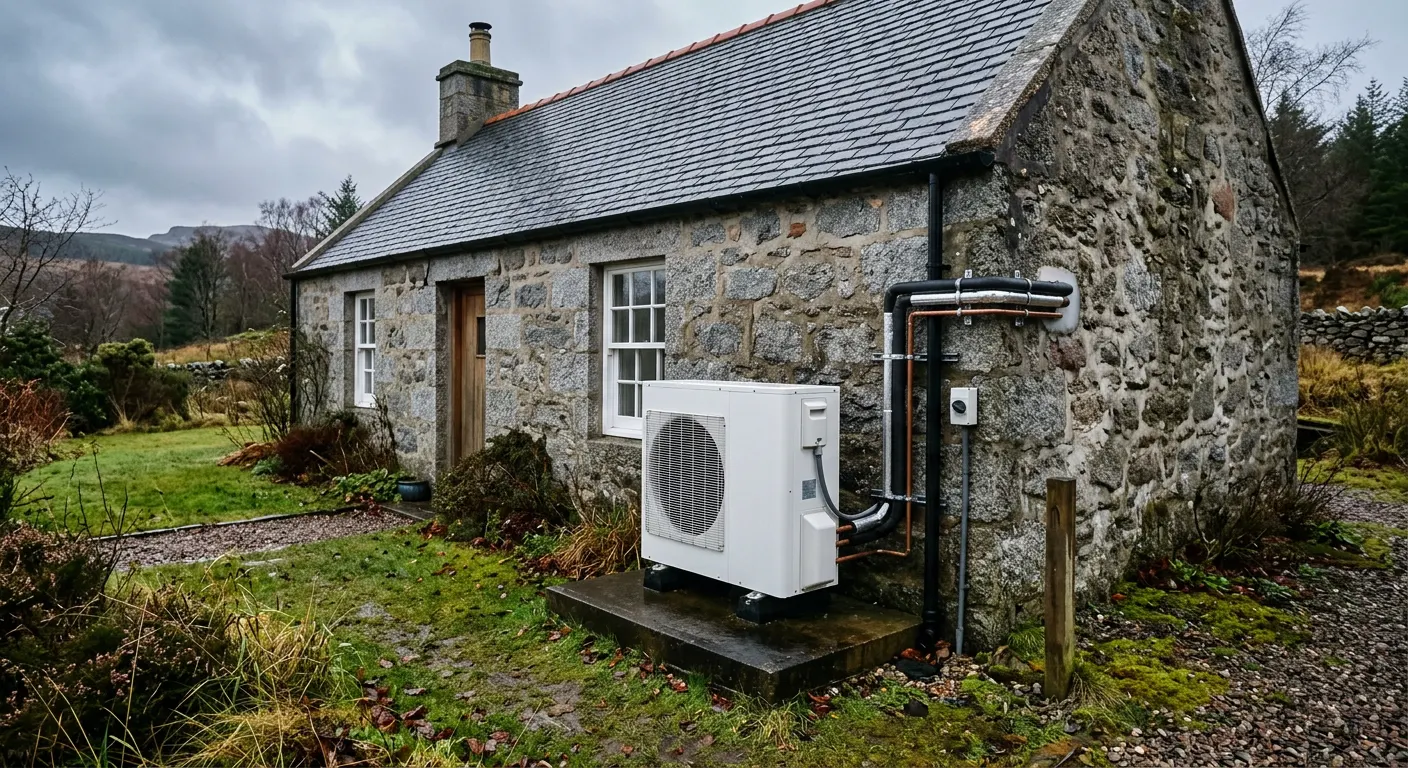
| Factor | Air source heat pump | Oil boiler |
|---|---|---|
| Fuel | Electricity from the grid | Heating oil delivered by tanker |
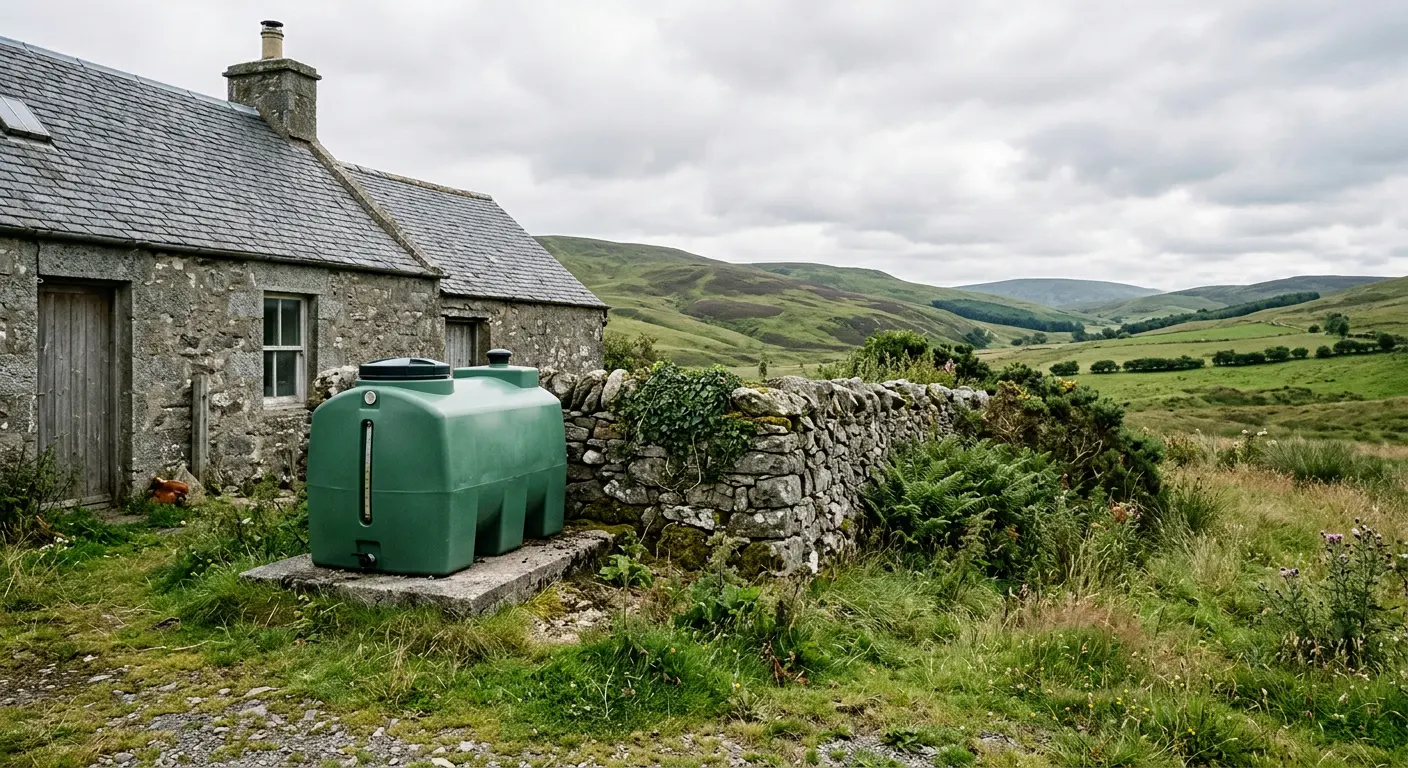
| Storage on site | No fuel storage needed | Oil tank required |
| Ordering fuel | Nothing to order or run out of | Monitor levels and order ahead of winter |
| Burns fuel at home | No | Yes |
| Radiators | Some may need upgrading for lower flow temperatures | Usually sized for high flow temperatures |
| Running cost | Depends on heat loss, flow temperature and tariff | Depends on oil prices, delivery costs and boiler efficiency |
Is a heat pump cheaper to run than an oil boiler in Scotland?
A heat pump can be cheaper to run than an oil boiler, because heat pumps are far more efficient and electricity is generally more price-stable than heating oil. The exact comparison depends on your property heat loss, the pump efficiency (SCOP), and prevailing energy prices. A heat loss survey gives you an honest comparison for your home.
Oil boilers are around 90% efficient at best, and oil prices fluctuate significantly based on global markets and delivery costs. Rural Scottish households often pay more per litre due to delivery surcharges and minimum order quantities. A heat pump can be 300% efficient or more, meaning three units of heat for every unit of electricity used. Even though electricity costs more per unit than oil, the efficiency gap means a well-installed heat pump in a properly insulated home can work out cheaper to run. The key is correct sizing and setup, which is why we always survey before quoting. We give you a realistic running cost comparison for your actual property, not a generic one.
What are the main advantages of a heat pump over an oil boiler?
The main advantages are no oil tank and no fuel deliveries, no risk of oil theft or spills, quieter operation inside the home, and lower carbon emissions. Interest-free credit is available, subject to status. You also remove the day-to-day hassle of monitoring oil levels and ordering before winter.
For rural Scottish households, the oil tank is a constant consideration. You have to monitor levels, time your orders to avoid running low in cold weather, and accept that prices can spike when demand is high. Oil theft is a real issue in some areas, and tank leaks can cause serious environmental damage and clean-up costs. A heat pump removes all of that. There is nothing to store, nothing to deliver, and nothing to run out of. We install through MCS-certified partners. Interest-free credit is available, subject to status, and 0% VAT applies to qualifying installations until 31 March 2027. For many rural households, the convenience alone is a significant factor on top of any running cost savings.
Can a heat pump replace an oil boiler in any property?
A heat pump can replace an oil boiler in most properties, but the system must be correctly sized to your home heat loss. Older, harder-to-heat homes may need insulation upgrades, larger radiators, or a higher flow temperature setting. A heat loss survey determines whether a heat pump is suitable and what adjustments are needed.
Oil boilers run at high flow temperatures, so the radiators in oil-heated homes are often sized for those temperatures. When you switch to a heat pump, which runs at lower flow temperatures, you may need larger radiators to deliver the same heat to each room. This does not mean every radiator needs replacing, but it is common for several to need upgrading. Pipework may also need widening. In some cases, a hybrid approach is possible, but in most rural Scottish homes we look at, a full heat pump system is viable with the right preparation. The survey gives you a room-by-room assessment so you know exactly what is needed before making a decision.
What happens to my oil tank if I switch to a heat pump?
If you switch to a heat pump, the oil tank is no longer needed. Removal and disposal of the tank is usually arranged as part of the installation process. You also stop needing oil deliveries, which removes the cost, inconvenience, and planning of monitoring fuel levels and ordering ahead of winter.
Tank removal depends on the tank type and location. Above-ground plastic tanks are usually straightforward to remove. Below-ground tanks may need to be emptied, cleaned, and either removed or filled with an inert material, depending on local regulations. We can advise on what is involved and arrange it as part of the overall installation where appropriate. Once the tank is gone, you have the space back and no ongoing maintenance or inspection costs. For many households, this is one of the most welcome parts of switching away from oil, particularly if the tank is old and approaching the end of its safe working life.
Do heat pumps work as well as oil boilers in cold rural properties?
Modern heat pumps are designed for cold climates and work efficiently well below freezing, so they can heat cold rural Scottish properties effectively. The key is correct sizing based on a proper heat loss survey. An undersized heat pump will struggle in cold weather, but a correctly sized system handles the coldest expected days comfortably.
Air source heat pumps are used widely across Scandinavia and Northern Europe, where winter temperatures regularly fall below those experienced in Scotland. The pump efficiency does drop as the outside temperature falls, but a properly sized system is specified to maintain your target indoor temperature at the design outside temperature for your area. The survey accounts for this. If your property is very exposed or poorly insulated, we flag what improvements would help the heat pump perform at its best. In our experience, rural Scottish homes are often good candidates for heat pumps, provided the system is sized and set up correctly. That is exactly what the survey is for.
Is switching from oil to a heat pump worth it?
For many rural Scottish homes, switching from oil to a heat pump is worth considering because there are no fuel deliveries, no tank maintenance, and running costs can be lower. The upfront cost is higher than a like-for-like oil boiler replacement, but the long-term savings and convenience often make it worthwhile. A survey gives you the full picture.
The decision comes down to your priorities. If you want to eliminate oil deliveries, reduce your exposure to oil price fluctuations, and spread the cost with interest-free credit (subject to status), a heat pump is a strong option. If your main concern is the lowest possible upfront cost, a new oil boiler is cheaper to install but leaves you with the same ongoing issues. We give you honest numbers for both options after the survey, including running cost comparisons, so you can make an informed choice. To arrange a survey, call 0141 230 0198, WhatsApp 0141 230 0198, or email info@scottishenergyefficiency.co.uk.
Want a figure for your own home?
A full heat loss survey comes first, then a written, itemised quote. Installation through our MCS-certified partners.
Frequently asked questions
Questions about this guide
A heat pump can be cheaper to run than an oil boiler, because electricity is generally more price-stable than heating oil and heat pumps are much more efficient. However, the exact comparison depends on your property heat loss, the pump efficiency (SCOP), and prevailing electricity and oil prices. A heat loss survey gives you an honest comparison for your home.
The main advantages are no oil tank, no fuel deliveries, no risk of theft or spills, quieter operation inside the home, and lower carbon emissions. Interest-free credit is available, subject to status. Heat pumps also require less day-to-day management than ordering and monitoring oil levels.
A heat pump can replace an oil boiler in most properties, but the system must be correctly sized to your home heat loss. Older, harder-to-heat homes may need insulation upgrades, larger radiators, or a higher flow temperature. A heat loss survey determines whether a heat pump is suitable and what adjustments are needed.
If you switch to a heat pump, the oil tank is no longer needed. Removal and disposal of the tank is usually arranged as part of the installation. You also no longer need oil deliveries, which removes the cost and inconvenience of monitoring fuel levels and ordering in advance of winter.
Modern heat pumps are designed for cold climates and work efficiently well below freezing, so they can heat cold rural properties effectively. The key is correct sizing based on a proper heat loss survey. An undersized heat pump will struggle in cold weather, but a correctly sized system is specified to handle the coldest expected days.
For many rural Scottish homes, switching from oil to a heat pump is worth considering because there are no fuel deliveries, no tank maintenance, and running costs can be lower. The upfront cost is higher than replacing an oil boiler, and interest-free credit is available, subject to status. A survey gives you the full picture.
Related guides
Keep reading
Get a quote
Ready for a real heat pump quote?
Fill in the form and we will call you back to book a full survey. No obligation, no single price before we have seen your house.
- 0141 230 0198
- Message us on WhatsApp
- info@scottishenergyefficiency.co.uk
- Unit 3 Prospect III, Prospect Business Centre, Dundee DD2 1TY
Get a quote
Fields marked * are required. We will call you back to book your survey.