What is a heat loss survey and why does it matter?
Last updated 1 November 2026 · Reviewed by the Scottish Energy Efficiency team · Costs are typical ranges, subject to survey

What is a heat loss survey?
A heat loss survey is a room-by-room assessment of how much heat your property loses, used to correctly size a heat pump and its radiators. The surveyor measures each room, notes insulation and glazing, and calculates the heat output needed to maintain your target temperature on the coldest expected day for your area.
The survey is the foundation of a good heat pump installation. Without it, any price or recommendation is a guess. Heat pumps are not one-size-fits-all: a pump that is too big short-cycles, turning on and off frequently, which wastes energy and wears the compressor. A pump that is too small cannot keep your home warm on the coldest days. The survey tells us exactly how much heat each room loses, so we can specify a pump that runs efficiently and keeps you comfortable all year round. It also tells us whether your existing radiators are big enough to deliver heat at the lower flow temperatures a heat pump uses, or which ones need upgrading.
Why is a heat loss survey essential before installing a heat pump?
A heat loss survey is essential because heat pumps must be precisely sized to your home heat loss. An oversized pump short-cycles and wastes energy, while an undersized pump cannot keep up on cold days. The survey also identifies which radiators need upgrading to work at the lower flow temperatures heat pumps use.
Gas boilers are forgiving of rough sizing because they run hot and fast. Heat pumps are different. They run at lower temperatures and work best when they match your home heat loss exactly. If the pump is too large, it cycles on and off, never reaching its efficient steady-state operation. If it is too small, it runs constantly on the coldest days and still cannot reach your target temperature, so it falls back on inefficient backup heating. The survey prevents both problems by giving us the precise heat loss figure for every room. It also flags insulation improvements that would reduce the pump size you need, which can lower both the installation cost and the running costs over time.
What happens during the survey?
The surveyor measures room dimensions, notes wall types and insulation, checks window and door types, assesses loft and floor insulation, records existing radiator sizes, inspects pipework, and identifies where the external heat pump unit can sit. This data feeds into calculations that determine the correct pump size and radiator requirements.
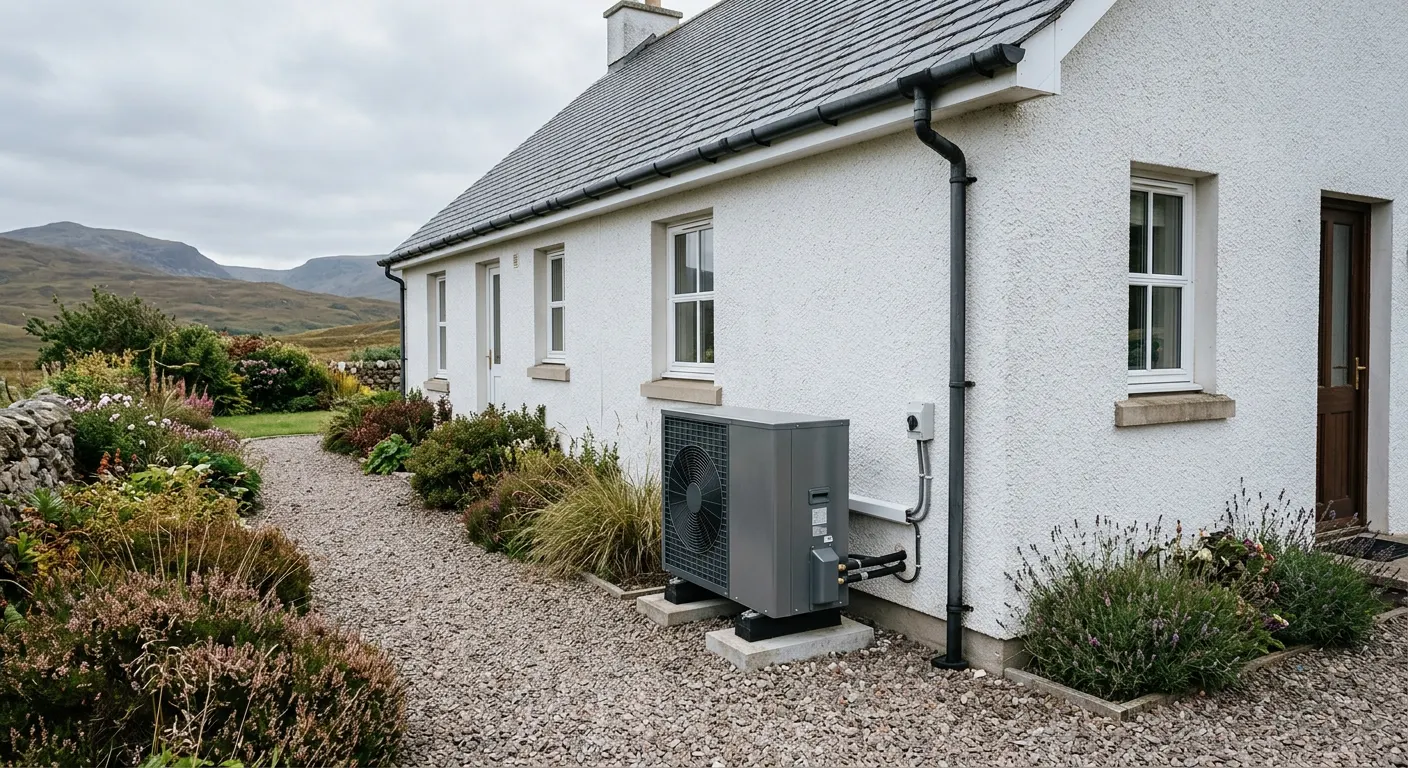
It is a thorough process. We do not just look at the boiler and guess. We go room by room, measuring and recording the construction details that affect heat loss: external wall area, window sizes and glazing types, ceiling heights, and exposure to wind. We check the loft insulation depth and note whether floors are solid or suspended. We measure every radiator and note its type, because this tells us whether it can deliver enough heat at the lower flow temperature the heat pump will use. We also look at where the external unit can be placed, considering airflow, noise, and proximity to the internal components. All of this feeds into a detailed calculation that produces the correct pump size, the right radiator specification, and an honest written quote.
How long does a heat loss survey take?
A typical heat loss survey takes around two hours for a standard three-bedroom home, depending on property size and complexity. The surveyor measures every room, assesses insulation and glazing, checks pipework and radiator sizes, and discusses your heating preferences before producing the calculations and a written quote.
Larger or more complex properties take longer. A tenement flat with multiple rooms and shared walls may take two to three hours. A large detached house or a property with unusual construction, such as solid stone walls or a room-in-roof, can take longer because there is more to measure and assess. We do not rush the survey, because the accuracy of the calculations depends on getting the measurements right. After the visit, we produce the calculations and a detailed report, usually within a few working days. You get the full findings whether or not you go ahead with an installation, so you have the information to make an informed decision.
What do I get after the survey?
After the survey, we produce a detailed report showing the heat loss for each room, the recommended heat pump size, which radiators need upgrading, any pipework changes, and a written installation quote. We talk you through the findings and answer your questions so you can make an informed decision.
The report is specific to your home. It shows the heat loss in kilowatts for each room, the total heat loss for the property, and the recommended heat pump capacity. It lists each radiator and whether it is adequate or needs replacing, with the recommended size for each room. It flags any pipework that needs widening and notes where the external unit will sit. It also includes a written, itemised quote for the full installation, so you know exactly what the work involves and what it costs. There are no hidden extras or vague estimates. If you want to discuss the findings, call us on 0141 230 0198, WhatsApp 0141 230 0198, or email info@scottishenergyefficiency.co.uk.
Can the survey identify insulation improvements?
Yes, the survey identifies where insulation improvements would reduce your heat loss, which can lower the heat pump size you need and reduce running costs. Common improvements include loft insulation top-ups, wall insulation, and draught-proofing. We flag these in the report so you can decide what to tackle before or alongside installation.
Insulation is often the most cost-effective way to reduce both the installation and running costs of a heat pump. If your loft insulation is thin, topping it up is cheap and immediately reduces heat loss. If you have solid walls, internal or external wall insulation makes a bigger difference but costs more, so we explain the trade-offs. The survey gives you a clear picture of where your home loses the most heat and what improvements would have the biggest impact. You can then decide what to do before installation, what to do alongside it, and what to leave for later. This is one of the most valuable parts of the survey, because it puts you in control of the cost and performance of the system.
Want a figure for your own home?
A full heat loss survey comes first, then a written, itemised quote. Installation through our MCS-certified partners.
Frequently asked questions
Questions about this guide
A heat loss survey is a room-by-room assessment of how much heat your property loses, used to correctly size a heat pump and its radiators. The surveyor measures each room, notes insulation and glazing, and calculates the heat output needed to maintain your target temperature on the coldest expected day.
You need a survey because heat pumps must be precisely sized to your home heat loss. An oversized pump short-cycles and wastes energy, while an undersized pump cannot keep up on cold days. The survey also identifies which radiators need upgrading to work at the lower flow temperatures heat pumps use.
A typical heat loss survey takes around two hours for a standard three-bedroom home, depending on property size and complexity. The surveyor measures every room, assesses insulation and glazing, checks pipework and radiator sizes, and discusses your heating preferences before producing calculations and a written quote.
The surveyor measures room dimensions, notes wall types and insulation, checks window and door types, assesses loft and floor insulation, records existing radiator sizes, inspects pipework, and identifies where the external heat pump unit can sit. This data feeds into calculations that determine the correct pump size and radiator requirements.
No. We carry out heat loss surveys as part of our quoting process, and the survey gives us the information needed to provide an accurate written quote rather than an estimate. Arranging a survey does not commit you to an installation. Ask us about any survey terms when you book.
After the survey, we produce a detailed report showing the heat loss for each room, the recommended heat pump size, which radiators need upgrading, any pipework changes, and a written installation quote. We talk you through the findings and answer any questions so you can make an informed decision.
Related guides
Keep reading
Get a quote
Ready for a real heat pump quote?
Fill in the form and we will call you back to book a full survey. No obligation, no single price before we have seen your house.
- 0141 230 0198
- Message us on WhatsApp
- info@scottishenergyefficiency.co.uk
- Unit 3 Prospect III, Prospect Business Centre, Dundee DD2 1TY
Get a quote
Fields marked * are required. We will call you back to book your survey.