Heat pump running costs in Scotland explained
Last updated 1 November 2026 · Reviewed by the Scottish Energy Efficiency team · Costs are typical ranges, subject to survey
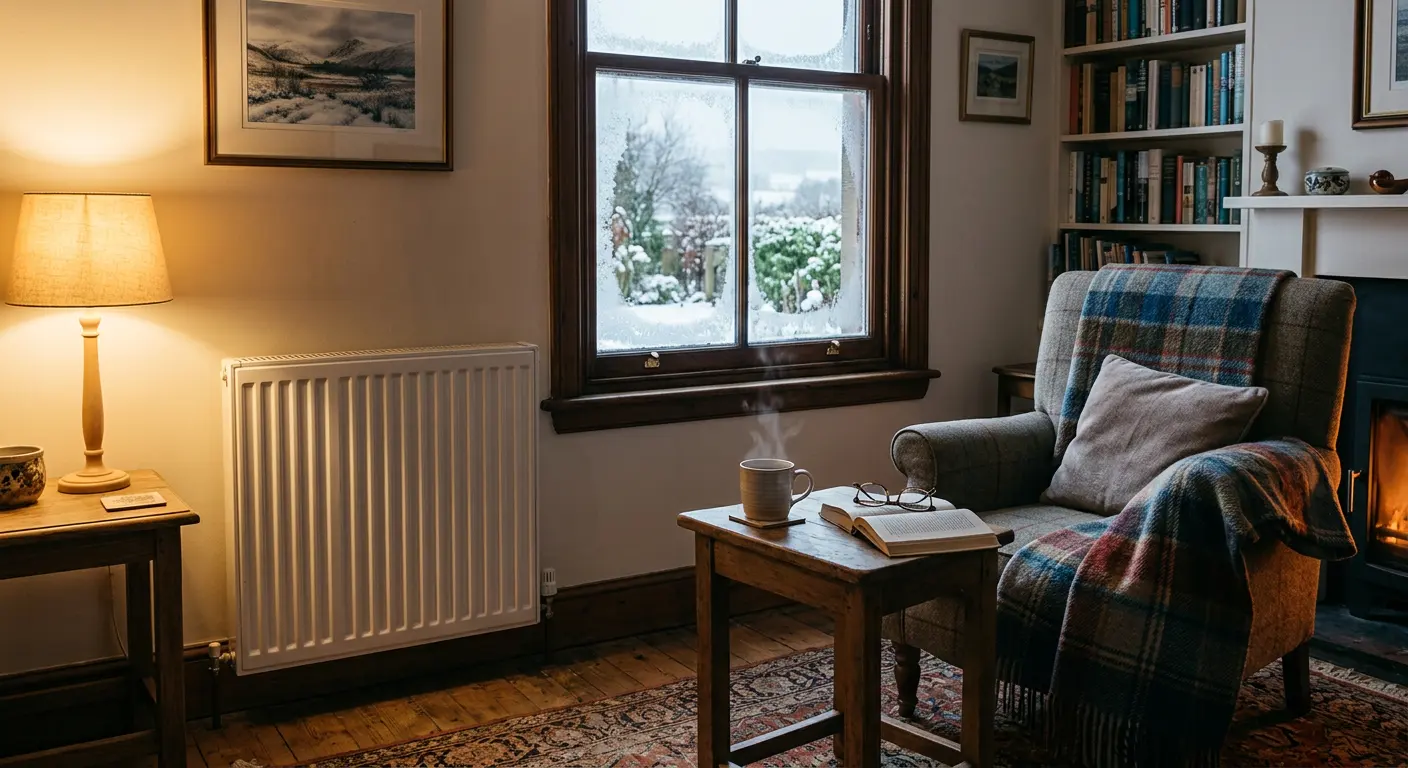
How much does a heat pump cost to run in Scotland?
Heat pump running costs depend on your property heat loss, the electricity unit price, and the pump efficiency (SCOP). There is no single figure that applies to every Scottish home, but a well-installed heat pump in a properly insulated property can be cheaper to run than a gas boiler. A heat loss survey gives you an honest estimate.
The reason there is no universal number is simple. A heat pump uses electricity to move heat rather than burn fuel, so its running cost is tied to how much heat your home actually loses. A well-insulated detached house in Stirling loses heat slowly and costs little to keep warm. A poorly insulated stone cottage on a hillside in the Highlands loses heat quickly and costs more, regardless of the heating system. The pump efficiency rating (SCOP) matters too: a higher SCOP means more heat per unit of electricity, which lowers running costs. Getting all three of these factors right for your property is what makes the difference between a heat pump that saves you money and one that disappoints.
Is a heat pump cheaper to run than a gas boiler?
A heat pump can be cheaper to run than a gas boiler if your home is well-insulated and the system is correctly sized and set up. Heat pumps are more efficient than gas boilers, but electricity costs more per unit than gas. The comparison depends on your property heat loss, your pump efficiency (SCOP), and prevailing energy prices.
A modern gas boiler is around 90% efficient, meaning most of the energy in the gas becomes heat. A heat pump can be 300% efficient or more, because it moves heat rather than generating it. However, electricity is currently more expensive per kilowatt-hour than gas, so the heat pump needs to be significantly more efficient to come out cheaper overall. Whether it does depends on your SCOP, which in turn depends on correct sizing, low flow temperatures, good insulation, and proper commissioning. This is why we always do a full heat loss survey before giving any indication of running costs. A properly specified system in a well-prepared home is where the real savings come from. An undersized or poorly set up system will not deliver them.
What is SCOP and why does it matter?
SCOP stands for Seasonal Coefficient of Performance. It measures how efficiently a heat pump converts electricity into heat across a full heating season. A SCOP of 3 means the pump produces three units of heat for every unit of electricity used. Higher SCOP means lower running costs and better value over time.
SCOP is not a fixed number for a given pump. It varies based on how the system is installed and configured. The main factors are the flow temperature (lower is better for efficiency), the outside temperature, and how well the pump is matched to your home heat loss. A heat pump running at 35°C flow temperature will have a higher SCOP than the same pump running at 55°C, because it does not have to work as hard. This is why correctly sized radiators matter: larger radiators let you run at lower flow temperatures while still delivering enough heat to each room. During commissioning, we set the flow temperature as low as your home allows, which maximises SCOP and minimises your running costs. We also explain what your expected SCOP range is so you have a realistic picture before committing.
How does insulation affect running costs?
Insulation has a major impact on heat pump running costs. A well-insulated home loses heat slowly, so the pump works less and uses less electricity. Poorly insulated homes need a larger pump running harder, which pushes running costs up. Insulation upgrades are often the most cost-effective way to reduce running costs.
Before installing a heat pump, it is worth looking at loft insulation, wall insulation, and draught-proofing. These are relatively low-cost improvements that reduce your heat loss, which means you can install a smaller, cheaper heat pump and run it more efficiently. In some older Scottish properties, solid wall insulation or room-in-roof insulation makes a big difference. Even if you do not upgrade everything at once, tackling the easiest improvements first can lower the heat pump size you need and reduce your long-term running costs. We factor the current state of your insulation into the heat loss survey and flag where upgrades would help most.
Do heat pumps work well in cold Scottish winters?
Yes, modern heat pumps are designed for cold climates and work efficiently well below freezing. They do use more electricity during cold spells because your home loses more heat, but this is true of any heating system. Correct sizing based on a proper heat loss survey ensures the pump can handle the coldest days comfortably.
Air source heat pumps are widely used across Scandinavia and other cold-climate countries, so Scottish winters are well within their operating range. The pump efficiency does drop as the outside temperature falls, because it has to work harder to extract heat from cold air, but a properly sized system is specified to keep your home warm at the coldest expected temperature for your area. This is called designing to the design outside temperature, and it is a standard part of the heat loss calculation. If a system is undersized, it will struggle in cold weather and cost more to run as it falls back on direct electric heating. This is why we never skip the survey: it is the only way to know the pump is big enough for the coldest days without being oversized for the rest of the year.
How can I keep my heat pump running costs down?
You can reduce running costs by improving insulation, keeping the flow temperature as low as possible, using smart heating controls, ensuring correct system sizing, and getting annual servicing. Even small flow temperature reductions can make a noticeable difference, because heat pumps become more efficient at lower temperatures.
Smart controls that learn your heating patterns and weather-compensate can reduce unnecessary energy use. Keeping the flow temperature low, within what your radiators can deliver, improves SCOP. Annual servicing keeps the pump running at peak efficiency and catches any small issues before they become bigger ones. If you want to understand what your running costs would look like before committing, call us on 0141 230 0198, WhatsApp 0141 230 0198, or email info@scottishenergyefficiency.co.uk. We will arrange a heat loss survey and give you a clear, honest picture for your home.
Want a figure for your own home?
A full heat loss survey comes first, then a written, itemised quote. Installation through our MCS-certified partners.
Frequently asked questions
Questions about this guide
Running costs depend on your property heat loss, electricity prices, and the pump efficiency (SCOP). A well-installed heat pump in a properly insulated Scottish home can cost less to run than a gas boiler, but there is no single figure that applies to every home. A heat loss survey gives you a running cost estimate for your specific property.
A heat pump can be cheaper to run than a gas boiler if your home is well-insulated and the system is correctly sized. Heat pumps are more efficient than gas boilers, but electricity costs more per unit than gas. The running cost comparison depends entirely on your property heat loss and the pump efficiency, measured by SCOP.
SCOP stands for Seasonal Coefficient of Performance. It measures how efficiently a heat pump converts electricity into heat over a full heating season. A SCOP of 3 means the pump produces three units of heat for every unit of electricity used. Higher SCOP means lower running costs, and correct sizing and flow temperature settings are key to achieving it.
Yes, insulation has a major impact. A well-insulated home loses heat slowly, so the heat pump works less and costs less to run. Poorly insulated homes need a bigger pump running harder, which increases electricity use. Insulation upgrades before or alongside a heat pump installation are often the most cost-effective way to reduce running costs.
Heat pumps work efficiently in Scottish winter temperatures, but they do use more electricity during cold spells because your home loses more heat. Modern heat pumps are designed for cold climates and continue working efficiently well below freezing. The key is correct sizing, which is why a heat loss survey matters before installation.
You can reduce running costs by improving insulation, lowering the flow temperature, using smart heating controls, and ensuring the system is correctly sized and serviced annually. Even small adjustments to flow temperature can make a noticeable difference, because heat pumps become more efficient at lower temperatures.
Related guides
Keep reading
Get a quote
Ready for a real heat pump quote?
Fill in the form and we will call you back to book a full survey. No obligation, no single price before we have seen your house.
- 0141 230 0198
- Message us on WhatsApp
- info@scottishenergyefficiency.co.uk
- Unit 3 Prospect III, Prospect Business Centre, Dundee DD2 1TY
Get a quote
Fields marked * are required. We will call you back to book your survey.