Heat pump vs gas boiler: an honest comparison
Last updated 1 November 2026 · Reviewed by the Scottish Energy Efficiency team · Costs are typical ranges, subject to survey
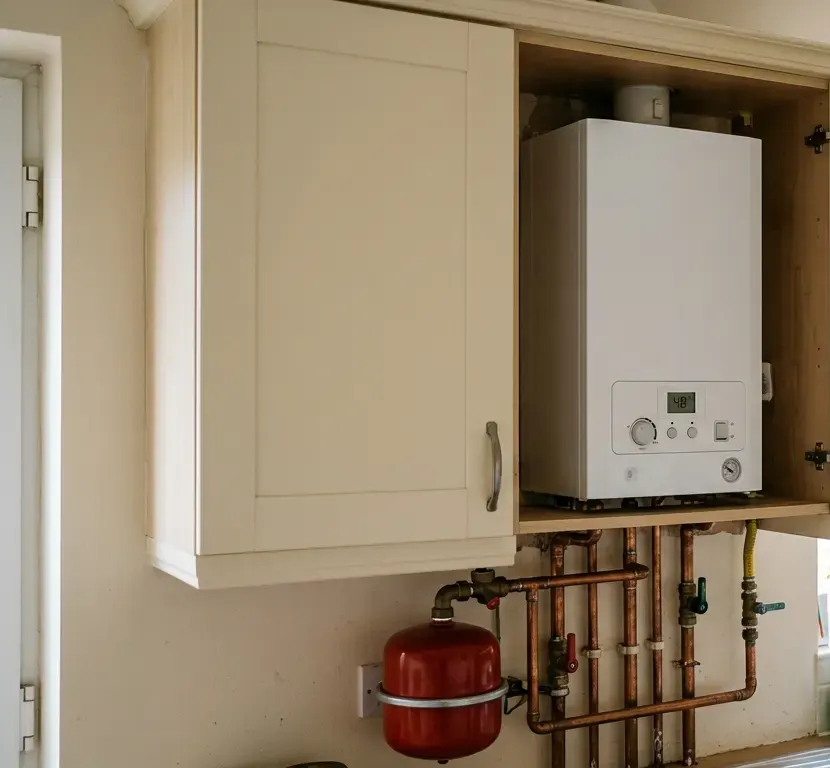
| Factor | Air source heat pump | Gas boiler |
|---|---|---|
| Fuel | Electricity from the grid | Mains gas |
| Burns fuel at home | No | Yes |
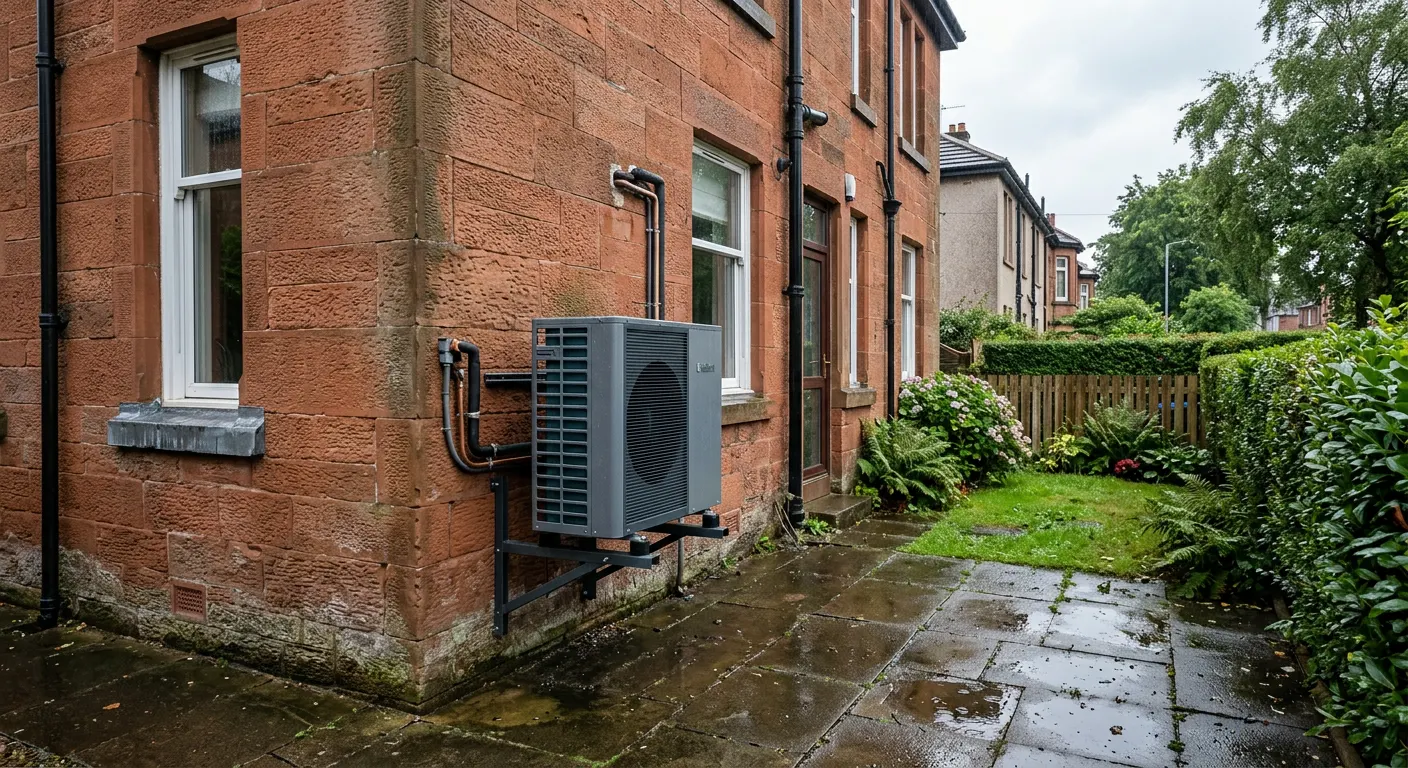
| Outdoor space | Needs a spot for the outdoor unit | No outdoor unit |
| Hot water | Stored in a hot water cylinder | Often instant from a combi boiler |
| Radiators | Some may need upgrading for lower flow temperatures | Usually sized for high flow temperatures |
| Running cost | Depends on heat loss, flow temperature and tariff | Depends on gas prices and boiler efficiency |
Is a heat pump cheaper to run than a gas boiler in Scotland?
A heat pump can be cheaper to run than a gas boiler if your home is well-insulated and the system is correctly sized. Heat pumps are significantly more efficient than gas boilers, but electricity costs more per unit than gas. The comparison depends on your property heat loss, the pump efficiency (SCOP), and prevailing energy prices.
A modern gas boiler is around 90% efficient. A heat pump can be 300% efficient or more, because it moves heat rather than burning fuel to create it. The question is whether that efficiency advantage is enough to overcome the higher per-unit cost of electricity. For a well-insulated home with a correctly sized heat pump running at a low flow temperature, it often is. For a poorly insulated home with an undersized or poorly configured pump, it may not be. This is why we never give a blanket answer. We survey your property, calculate your heat loss, and give you a realistic running cost comparison based on your actual circumstances. That is the only honest way to do it.
What are the main differences between a heat pump and a gas boiler?
The main differences are that heat pumps run at lower flow temperatures, often need larger radiators, use electricity instead of gas, produce no combustion emissions, and are more energy efficient. Gas boilers are cheaper to install, simpler to swap, and run at higher temperatures that suit existing radiator systems without upgrades.
A gas boiler burns gas to heat water to around 70°C and pumps it through your radiators. A heat pump extracts heat from outside air, compresses it, and circulates water at 35°C to 55°C. Because the water is cooler, each radiator delivers less heat per square metre, so you may need bigger radiators. The heat is also delivered more steadily and gently, which many people find more comfortable than the hot-then-cool cycle of a boiler. Gas boilers are familiar, quick to install as a like-for-like replacement, and work with existing radiators and pipework. Heat pumps cost more upfront but are more efficient and produce no local emissions. Each has its place, and the right choice depends on your home, budget, and priorities.
Can a heat pump replace a gas boiler in any home?
A heat pump can replace a gas boiler in most homes, but the system must be correctly sized to your heat loss. Because heat pumps run at lower flow temperatures, you may need larger radiators and wider pipework. A heat loss survey determines exactly what is needed for your specific property before you commit to anything.
In practice, most Scottish homes can take a heat pump, but the preparation varies. A modern, well-insulated home might need very little adaptation. An older property with single glazing, solid walls, or narrow pipework might need more work to get the best out of a heat pump. This does not mean it is not viable, just that the survey is essential. We assess every room, calculate the heat loss, and tell you exactly which radiators need upgrading and whether any pipework changes are required. You get a full picture of the work involved and the cost before deciding. We install through MCS-certified partners. Interest-free credit is available, subject to status, and 0% VAT applies to qualifying installations until 31 March 2027.
Is a heat pump better for the environment than a gas boiler?
Yes, a heat pump produces no direct emissions at the home and is more energy efficient than a gas boiler. Because heat pumps run on electricity, their carbon footprint depends on the grid, but the Scottish electricity grid includes a high proportion of renewable generation, so heat pumps are significantly lower carbon overall.
A gas boiler burns fossil fuel on-site, producing carbon dioxide every time it runs. A heat pump uses electricity, and the Scottish grid draws heavily on wind, hydro, and other renewables. This means the electricity powering your heat pump is cleaner than the gas burning in a boiler, and the gap is widening as more renewable capacity comes online. The higher efficiency of a heat pump means it uses less energy overall to deliver the same heat, which further reduces its carbon footprint. For households looking to reduce their environmental impact, a heat pump is one of the most effective changes you can make to your heating system.
Will a heat pump heat my home as well as a gas boiler?
A correctly sized and installed heat pump heats your home just as effectively as a gas boiler. The difference is that heat pumps run at lower flow temperatures, so they warm radiators more gently and steadily rather than in sharp bursts. This can feel more comfortable, but requires correctly sized radiators to deliver enough heat.
Some people worry that lower radiator temperatures mean a colder home. They do not, provided the radiators are sized correctly for the lower flow temperature. A larger radiator at 45°C can deliver the same heat to a room as a smaller radiator at 70°C. The heat feels different: rather than the radiator being hot to the touch and then cooling down between boiler cycles, a heat pump keeps the radiator consistently warm. Many people find this more comfortable. The important thing is that the survey and radiator sizing are done properly, because an undersized radiator at a low flow temperature will not heat the room effectively. That is why we calculate every room individually.
Should I replace my gas boiler with a heat pump now or wait?
Whether to switch now depends on your boiler age, home insulation, and priorities. If your boiler is nearing the end of its life, a heat pump is worth serious consideration as a replacement. If your boiler is relatively new, you might wait, but improving insulation now means a future switch is cheaper and more effective.
There is no single right answer. If your boiler is old and unreliable, replacing it with a heat pump now makes sense, because you are spending on a replacement anyway and interest-free credit is available, subject to status. If your boiler has years of life left, the financial case is different, but you can still prepare by improving insulation, which reduces the size and cost of a future heat pump. We help you weigh this up honestly. To talk through your options, call 0141 230 0198, WhatsApp 0141 230 0198, or email info@scottishenergyefficiency.co.uk.
Want a figure for your own home?
A full heat loss survey comes first, then a written, itemised quote. Installation through our MCS-certified partners.
Frequently asked questions
Questions about this guide
A heat pump can be cheaper to run than a gas boiler if your home is well-insulated and the system is correctly sized. Heat pumps are more efficient than gas boilers, but electricity costs more per unit than gas. The comparison depends on your property heat loss, the pump efficiency (SCOP), and prevailing energy prices. A survey gives you an honest answer.
The main differences are that heat pumps run at lower flow temperatures, often need larger radiators, use electricity instead of gas, produce no combustion emissions, and are more efficient. Gas boilers are cheaper to install, simpler to swap, and run at higher temperatures, which suits existing radiator systems without upgrades.
A heat pump can replace a gas boiler in most homes, but the system must be correctly sized to your heat loss. Because heat pumps run at lower flow temperatures, you may need larger radiators and wider pipework. A heat loss survey determines what is needed for your specific property before you commit.
Yes, a heat pump produces no direct emissions at the home and is more energy efficient than a gas boiler. Because heat pumps use electricity, their carbon footprint depends on the grid, but the Scottish electricity grid includes a high proportion of renewable generation, so heat pumps are lower carbon overall.
A correctly sized and installed heat pump heats your home just as effectively as a gas boiler. The difference is that heat pumps run at lower flow temperatures, so they warm radiators more gently and steadily rather than in sharp bursts. This can feel more comfortable, but requires correctly sized radiators to deliver enough heat.
Whether to switch now depends on your boiler age, home insulation, and priorities. If your boiler is nearing the end of its life, a heat pump is worth considering as a replacement. If your boiler is relatively new, you might wait, but improving insulation now means a future switch is cheaper and more effective. A survey helps you decide.
Related guides
Keep reading
Get a quote
Ready for a real heat pump quote?
Fill in the form and we will call you back to book a full survey. No obligation, no single price before we have seen your house.
- 0141 230 0198
- Message us on WhatsApp
- info@scottishenergyefficiency.co.uk
- Unit 3 Prospect III, Prospect Business Centre, Dundee DD2 1TY
Get a quote
Fields marked * are required. We will call you back to book your survey.